Back to Data and Methods
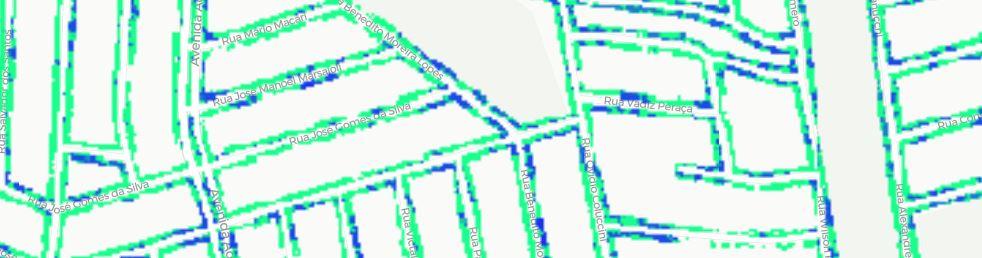
Image Preview

Universal Thermal Climate Index (Change)

Overview

This layer shows the change in Universal Thermal Climate Index (UTCI), a temperature-like metric that describes how hot or cold conditions feel to the human body, based on a modeled infrastructure scenario. UTCI combines the physiological effects of air temperature, humidity, wind speed, and radiation on human thermal comfort. The index reflects how people experience outdoor conditions by accounting for heat exchange between the human body and the surrounding environment, including typical clothing adaptation to local weather conditions. UTCI is calculated using meteorology from ERA5 reanalysis data and Mean Radiant Temperature (MRT) modeled with the open-source SOLWEIG (SOlar and LongWave Environmental Irradiance Geometry) model.

Function
To estimate how thermal stress varies with infrastructure changes.
Source
WRI
Data sources
Sentinel2-derived FabDEM (30m)​, Overture building footprints (Google, Microsoft, OSM)​, UT-GLOBUS building height (ICESat-2 and GEDI), WRI/Meta tree canopy height (1m)​, WRI OpenUrban land use (1m)​, ERA5 meteorology (~9km).
Spatial resolution
1 meter
Spatial coverage
Areas of interest identified by cities
Temporal resolution
hour
Temporal coverage
We are providing data corresponding to one historical day of reference based on highest registered air temperature during the previous year.
Cautions
A limitation of this open-source modeling approach is the error created by input datasets. UTCI data is heavily influenced by the placement, extent, and height of trees and buildings. A reliance on open-source, global datasets with varied error produces a range of misplaced, missing, or erroneous shadows that, accordingly, affect UTCI. While presented at a 1m resolution, inputs to the UTCI layer (shown above in ‘Data Sources’) include datasets at coarser resolutions (e.g., 30m DEM) and datasets with spatial errors known to be well above 1m (e.g., building heights and their shadows). Thus, at a very high resolution, an expert local viewer will see features that they know are wrong or missing in the maps. We do not recommend that the data be used to guide specific interventions. The UTCI values across a neighborhood in sun, tree shade, and building shade, as well as on varied urban surfaces, are realistic and can be compared and used to understand the dynamics of hyperlocal urban heat. These values, and the metrics calculated across a neighborhood or city, can be used to support and guide policy.
License
https://creativecommons.org/licenses/by/4.0/