Data and Methods
Learn more about Cool Cities Datasets.
Layers
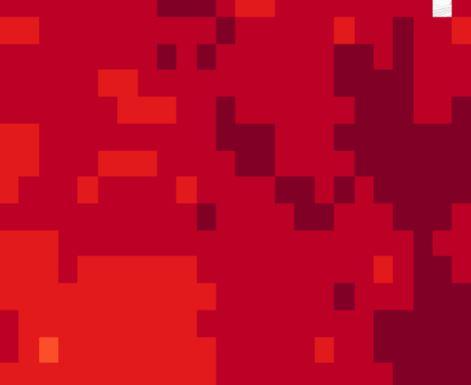
Air temperature (Baseline)
This layer shows air temperature at 3 p.m. based on current, baseline conditions. Air temperature is calculated using an empirical model that considers maximum daily temperature from Daymet as well as tree fraction, albedo, distance to water, time, wind, and solar radiation. This data is calculated for all land areas
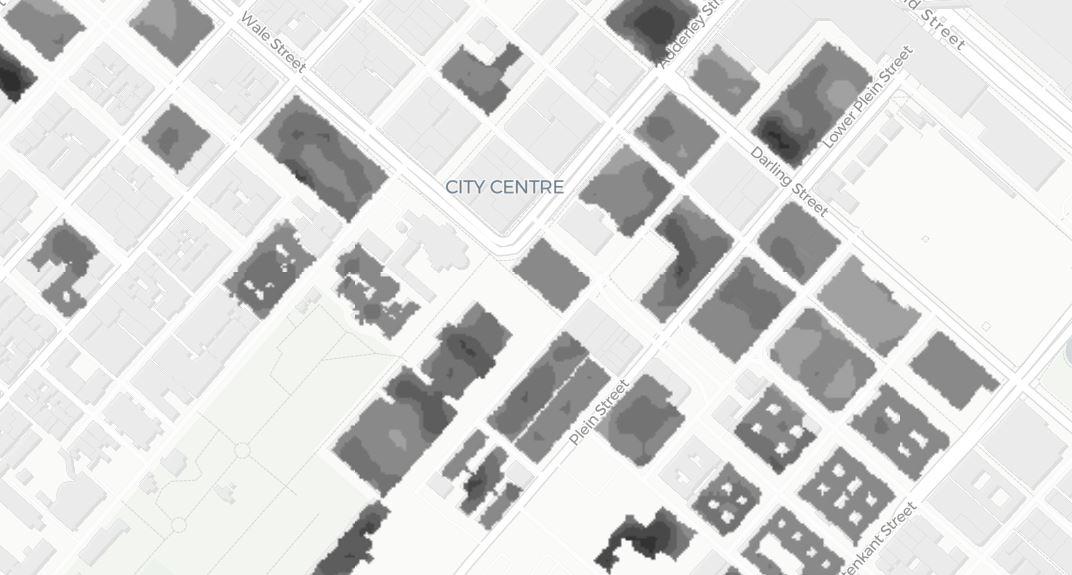
Surface reflectivity
This layer shows surface reflectivity, a measure of how much sunlight a surface reflects. Here, surface reflectivity is expressed as a value between 0 and 100%, representing the proportion of incoming solar radiation reflected by a surface. This same information is also common reported as albedo, a number beween 0 (for no light reflected) and 1 (for all light reflected). Light-colored surfaces have higher reflectivities, while darker surfaces absorb more heat and have lower reflectivities. The data are derived from Sentinel-2 satellite imagery using the methods of Bonafoni and Sekertekin (2020) for calculating albedo, which represents reflectivity on a scale of 0 to 1, and downscaled to a higher spatial resolution.
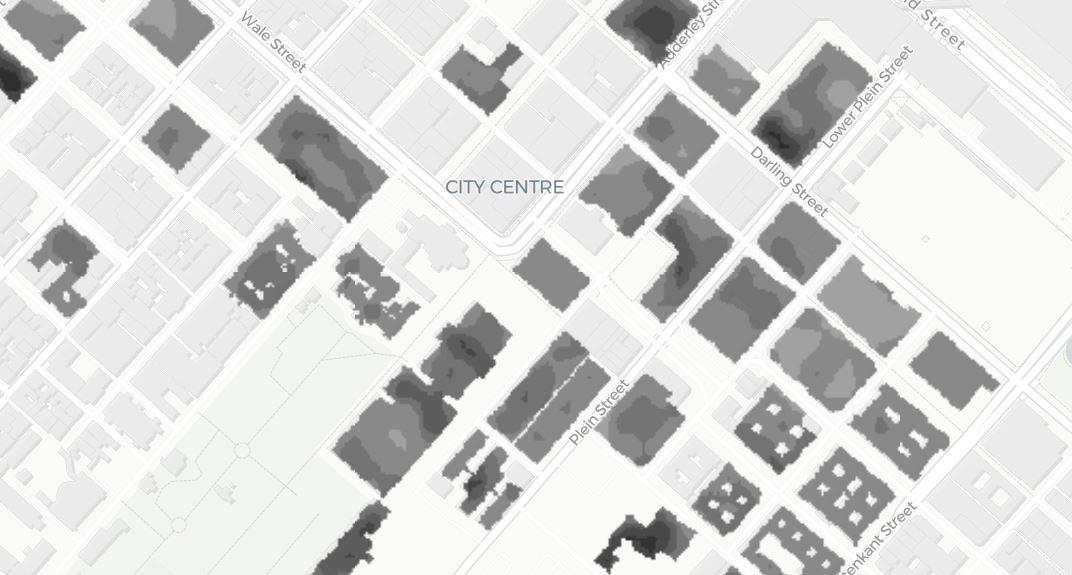
Surface reflectivity (Scenario)
This layer shows the change in surface reflectivity—a measure of how much sunlight surfaces reflect—under a modeled scenario where all roofs have their reflectivities increased to that of cool roofs. Surface reflectivity is expressed as a value between 0 and 100%, representing the proportion of incoming solar radiation reflected by a surface. Light-colored surfaces have higher reflectivities, while darker surfaces absorb more heat and have lower reflectivities. The data are derived from Sentinel-2 satellite imagery using the methods of Bonafoni and Sekertekin (2020) for calculating albedo, which represents reflectivity on a scale of 0 to 1, and downscaled to a higher spatial resolution.
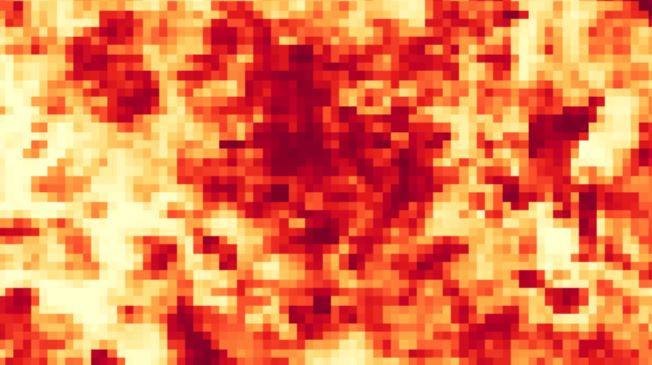
General population heat risk index
This layer shows the general population heat risk index and can help answer the question: Where are there many people living in areas with high heat hazard and low levels of existing heat-resilient infrastructure? The index assigns equal weight to three components: hazard, exposure, and adaptive capacity. Hazard is assessed as land surface temperature. Exposure is assessed as residential population density. Adaptive capacity is assessed as tree cover, vegetation cover and surface reflectivity.
Priority cool roof opportunity index
This layer shows the priority cool roof opportunity index and can help answer the question: Where is it possible to increase surface reflectivity of a large area using cool roofs in places that also have high surface temperatures? The index assigns equal weight to two components: hazard and opportunity. Hazard is assessed as land surface temperature. Opportunity is assessed as cool roof opportunity.
Priority tree opportunity index
This layer shows the priority tree opportunity index and can help answer the question: Where is it possible to plant trees in places that also have high ground level temperatures and high amenity density (a proxy for pedestrian activity)? The index assigns equal weight to three components: hazard, exposure, and opportunity. Hazard is assessed as land surface temperature. Exposure is assessed as amenity density. Adaptive capacity is assessed as tree opportunity.
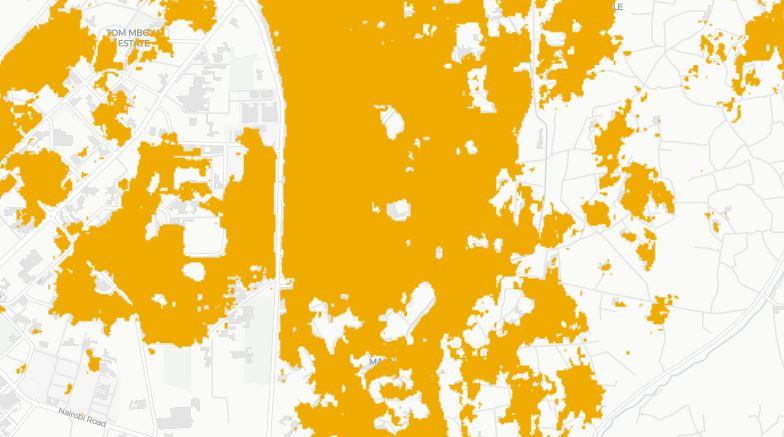
Irregular settlements
This layer shows Irregular settlements—areas classified as informal or atomistic development based on automated analysis of satellite imagery in the Global Intra-Urban Land Use dataset (Guzder-Williams et al. 2023). Informal and atomistic development are characterized by structures and streets (or other paths for human movement) that are not the product of formal planning processes. Atomistic settlements commonly are served by formal services such as stormwater management and formal electricity, while informal settlements commonly are not served by formal services.
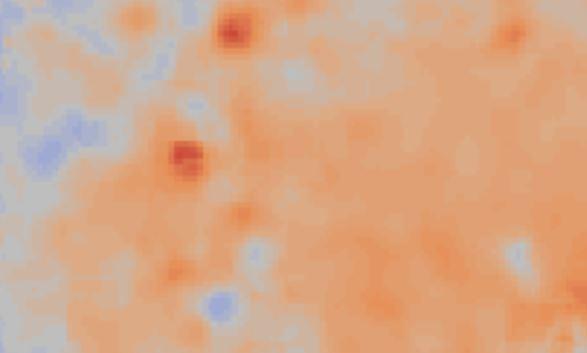
Land Surface Temperature
This layer shows land surface temperature (LST) for each pixel from the Landsat surface temperature band as retrieved from Google Earth Engine. The layer reports the 95th percentile LST value calculated from a mosaic of cloud masked Landsat images from years 2023-2025 selected from the 90-day window centred on the median hottest date as determined from ERA5 DAILY.
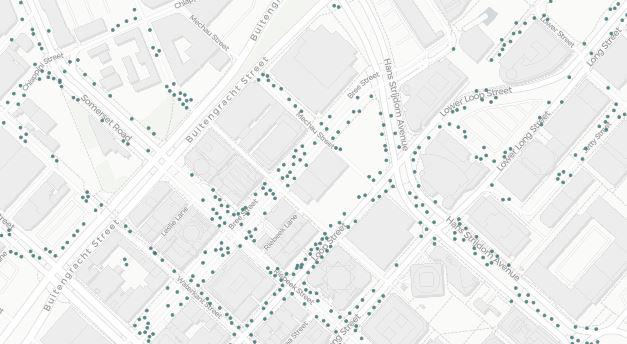
Simulated additional tree locations
This layer shows the additional trees added under a modeled scenario. Tree locations represent the placement of individual trees within plantable areas to achieve the target canopy coverage.
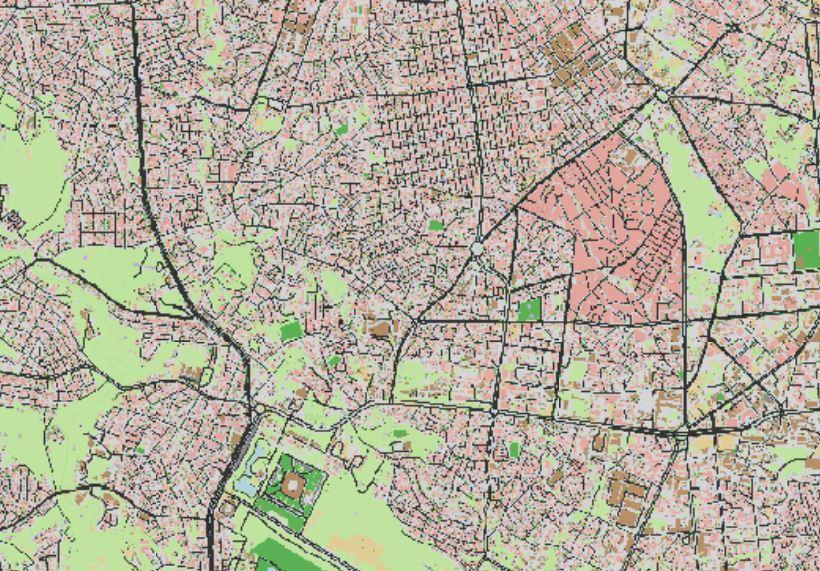
OpenUrban Land Use/Land Cover
This layer shows the OpenUrban land use and land cover dataset, a high-resolution map of urban features that influence heat. Derived primarily from OpenStreetMap and supplemented with satellite-based data products, OpenUrban maps features such as buildings, roads, parks, and parking lots to provide a detailed representation of the urban landscape.
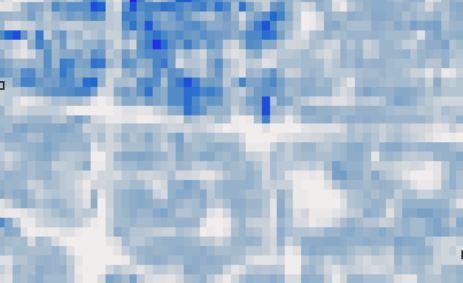
Cool roof opportunity
This layer shows the potential increase in reflectivity if existing dark roofs were replaced with cool roofs. Values are calculated for each 100-meter grid cell and represent the change in average reflectivity of the surface area as a whole, not just to roofs.
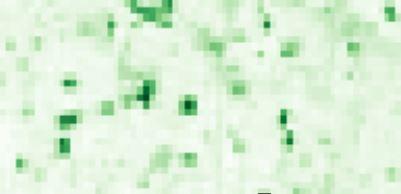
Tree opportunity
This layer shows the potential increase in tree cover as a share of all surface area if all plantable areas reached their achievable planting potential. Values are calculated for each 100-meter grid cell and represent the change in total tree cover based on target levels derived from areas in the city where tree planting is already highly implemented.
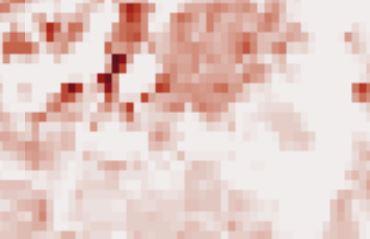
Amenities (OpenStreetMap)
This layer shows amenities—locations where city residents can access goods, services, employment, and other necessities of life—based on the most recent public contributions to the crowdsourced spatial dataset OpenStreetMap.
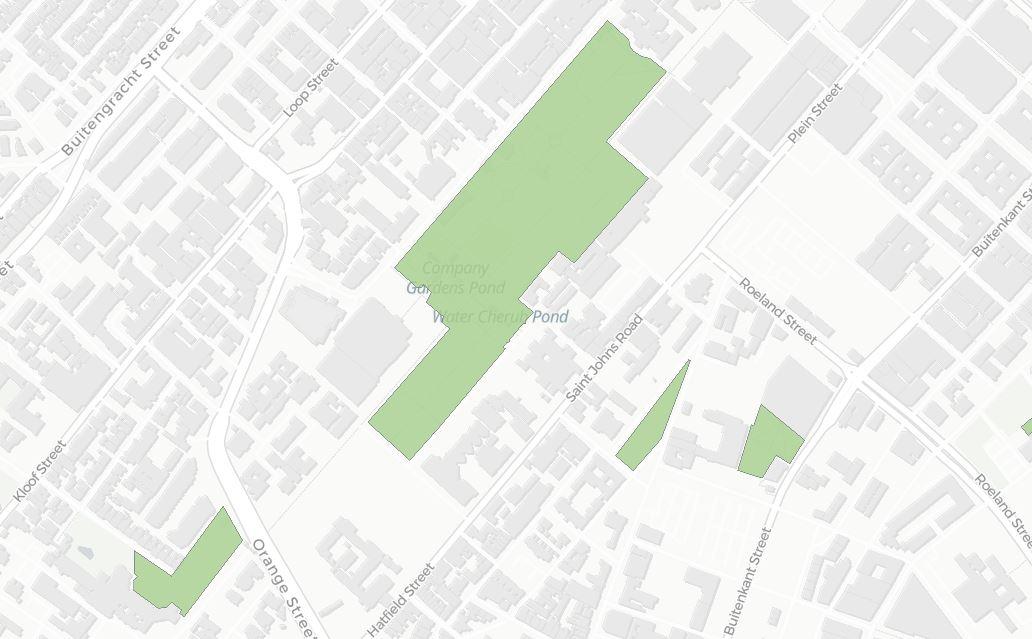
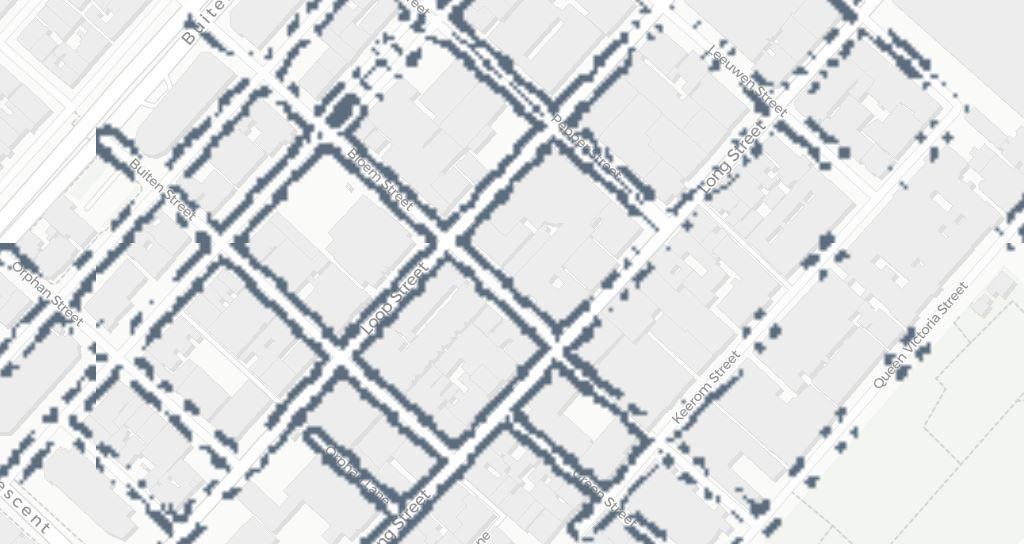
Pedestrian areas
This layer shows areas alongside roads where where pedestrians are likely to move through the urban environment. Pedestrian areas are defined as the 5-meter zone adjacent to roads, excluding major highways. Areas occupied by buildings, water, or the road surface itself are excluded.
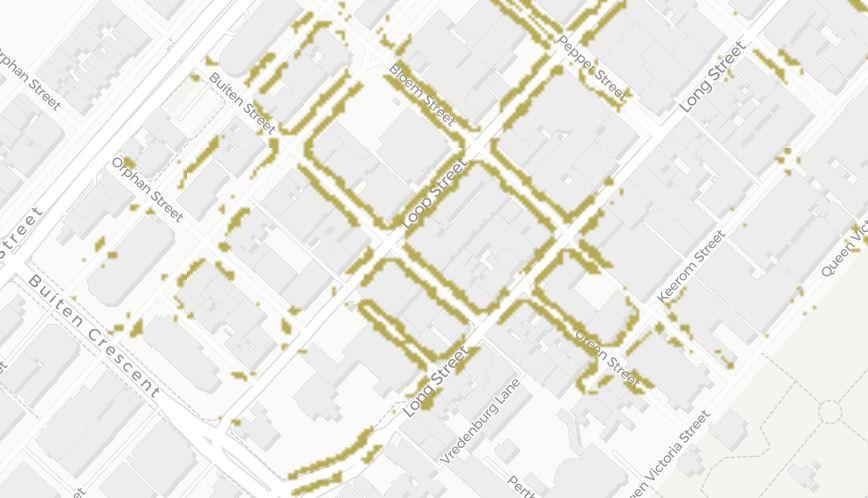
Plantable areas
This layer shows areas where street trees can potentially be planted. Plantable areas are defined as a subset of pedestrian areas that are not within 5 m of buildings or 9 m of intersections and that do not already contain tree canopy. These constraints approximate practical limitations for planting street trees.
Population
Population is an estimate of persons per 100-meter grid cell in 2022, based on analyses of satellite imagery conducted by the population research organization WorldPop.
Population (Young children)
This layer shows the population of young children—all persons aged 0 through 4 years—estimated per 100-meter grid cell in 2020, derived from modeling conducted by the population research organization WorldPop based upon national censuses and earth observation data.
Population (Elderly)
This layer shows the population of elderly persons—persons 60 years of age or older—estimated per 100-meter grid cell in 2020, derived from modeling conducted by the population research organization WorldPop based upon national censuses and earth observation data.
Population (women and girls)
This layer shows the population of female persons of all ages estimated per 100-meter grid cell in year 2020, derived from modeling conducted by the population research organization WorldPop based upon national censuses and earth observation data.
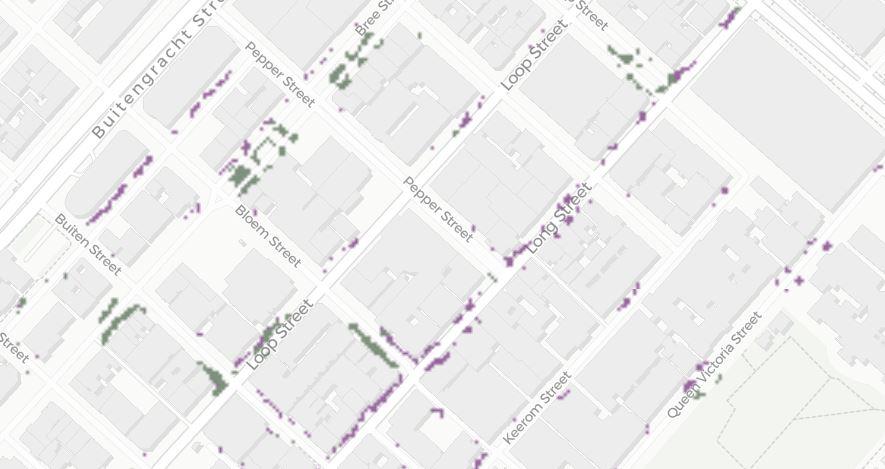
Shade (Baseline)
This layer shows areas shaded by buildings and trees at 3 p.m.. Shade is modeled using the open-source SOLWEIG (SOlar and LongWave Environmental Irradiance Geometry) model, which simulates shadows based on the three-dimensional structure of buildings and trees, ground elevation, and the position of the sun. The model estimates how shade moves and changes throughout the day across the study area. Caution: the 1m resolution shade dataset is calculated based on sun angle and open-source building and tree data, which can contain errors in feature placement and height. Therefore, the 1m shade pixels are likely to have inaccuracies, but mostly at only very micro-scales of a few meters.
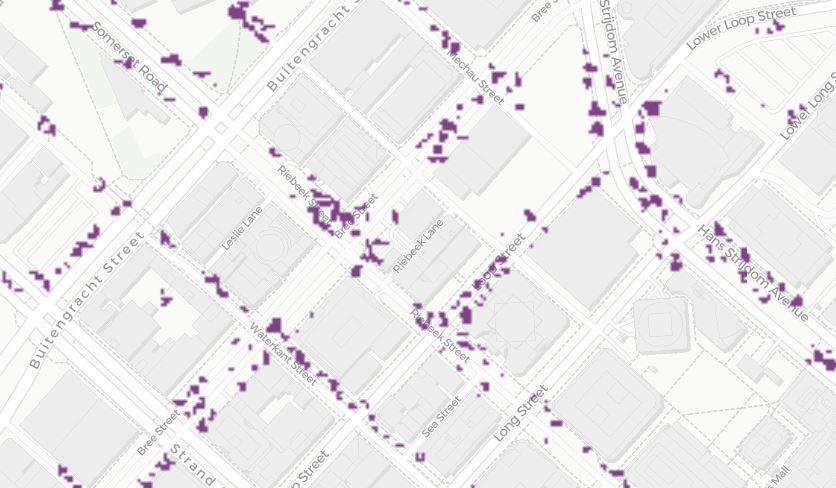
Shade cover—change
This layer shows change in areas shaded by buildings and trees at 3 p.m. based on a modeled infrastructure scenario. Shade is modeled using the open-source SOLWEIG (SOlar and LongWave Environmental Irradiance Geometry) model, which simulates shadows based on the three-dimensional structure of buildings and trees, ground elevation, and the position of the sun. The model estimates how shade moves and changes throughout the day across the study area. Caution: 1m resolution shade is based on open-source building and tree data, which can contain errors in feature location and height.
Shade (Scenario)
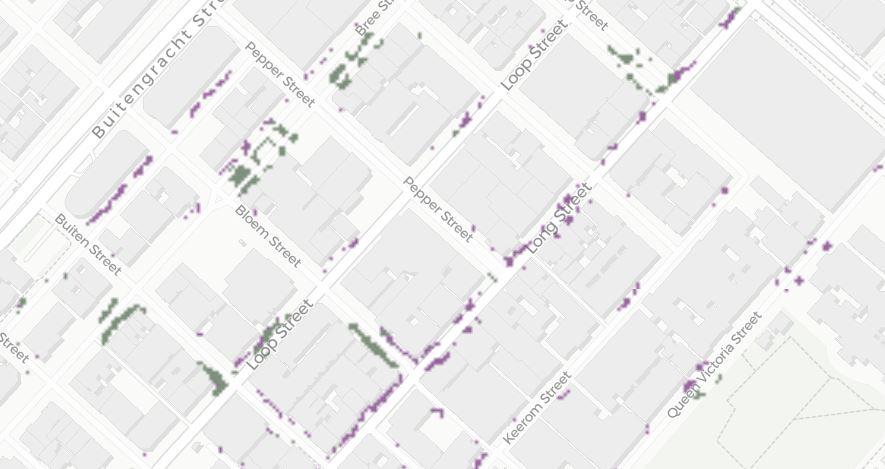
This layer shows areas shaded by buildings and trees at 3 p.m. based on a modeled infrastructure scenario. Shade is modeled using the open-source SOLWEIG (SOlar and LongWave Environmental Irradiance Geometry) model, which simulates shadows based on the three-dimensional structure of buildings and trees, ground elevation, and the position of the sun. The model estimates how shade moves and changes throughout the day across the study area. Caution: 1m resolution shade is based on open-source building and tree data, which can contain errors in feature location and height.
Shade structures
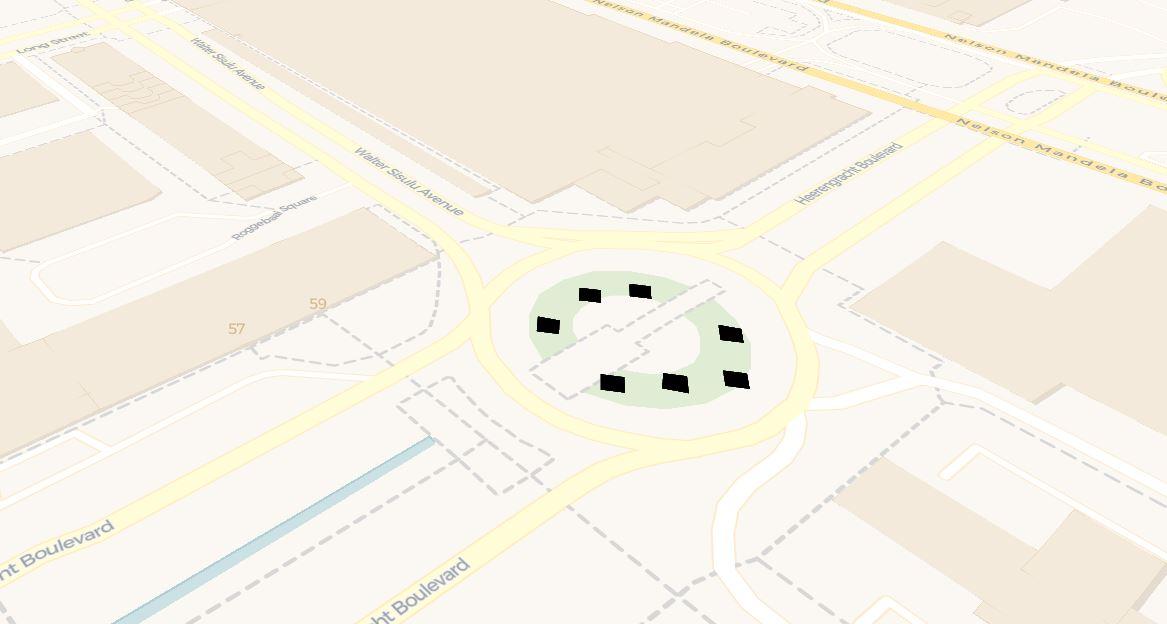
This layer shows a modeled implementation of shade structures within parks. The structures are assumed to be 5 × 5 square meters in area and 2.44 meters tal. Shade structures are placed in areas that are unshaded at 12pm local time to increase access to shade. In smaller parks, structures are added to ensure at least 25% shade cover at 12pm local time, while in larger parks they are placed to maintain a maximum distance to shade of 50 meters.
Tree cover
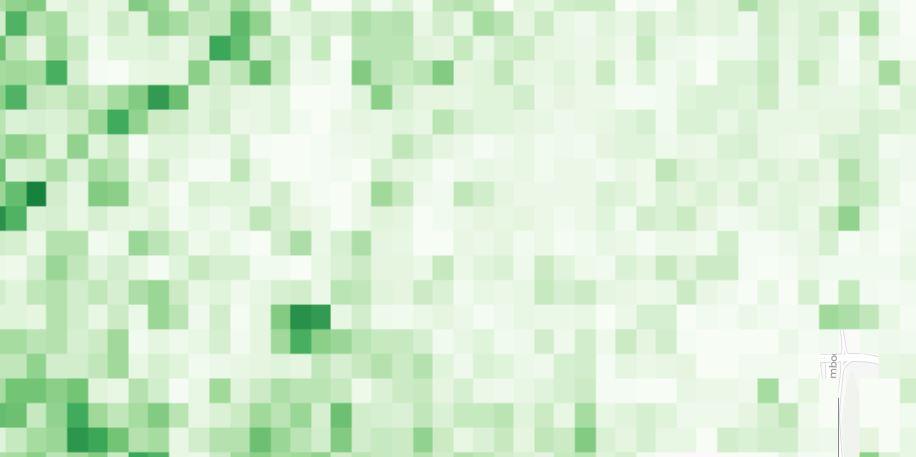
Percent of tree cover (with height more than 3 meter) per 100m pixel based on the Global Tree Canopy height Dataset (Meta and WRI). The source data is a product of automated analysis of satellite imagery and lidar data.
Tree cover - scenario
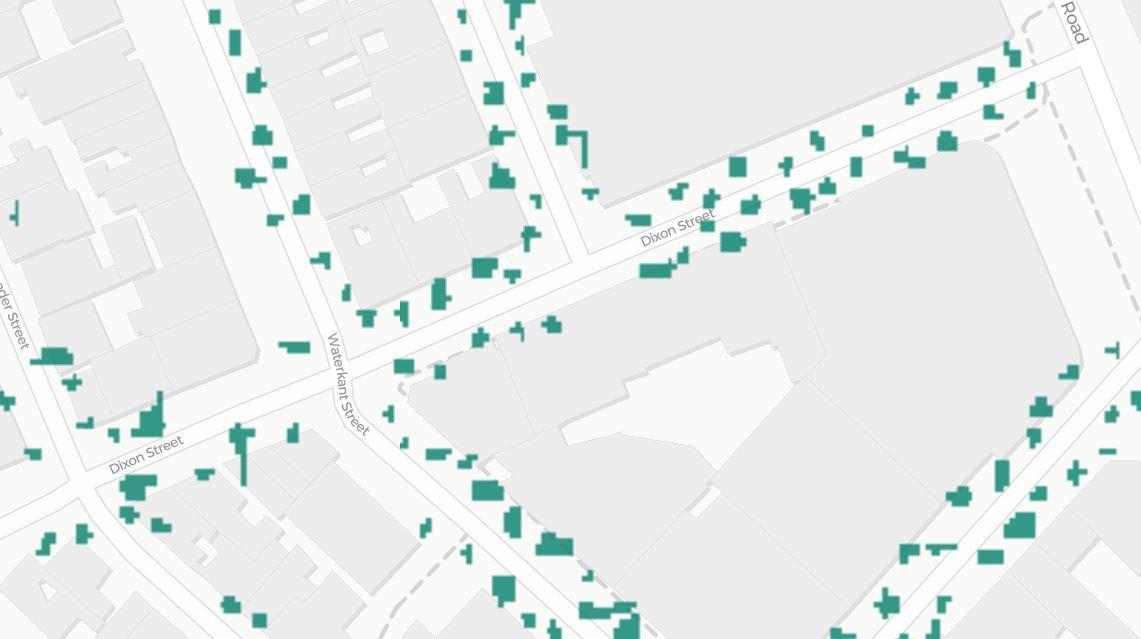
This layer shows the total tree canopy resulting from a modeled scenario implementation (baseline + change). Trees are added within plantable areas until the target canopy coverage is reached. The height and crown structure of the simulated trees are derived from the characteristics of existing trees in the city to represent realistic planting outcomes.
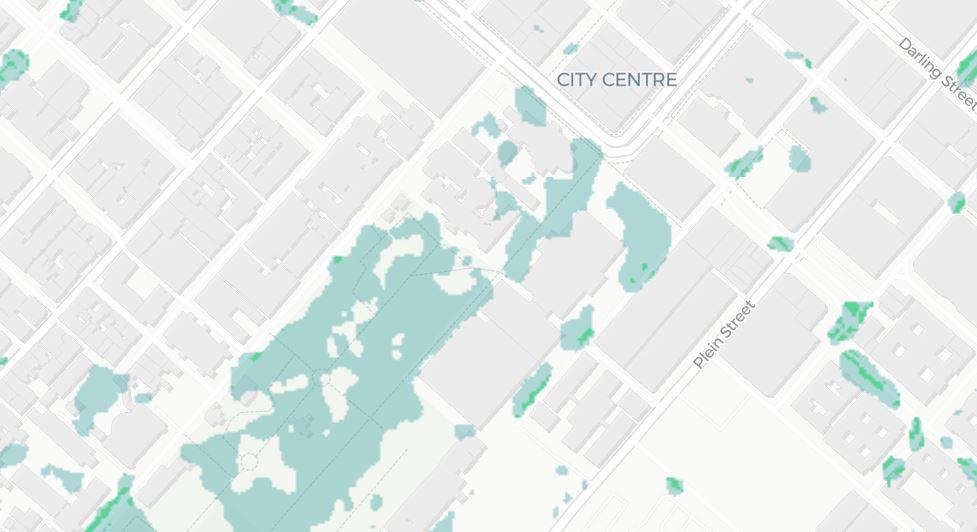
Tree cover — baseline
This layer shows the existing tree canopy across the city. The dataset was created in 2024 by WRI and Meta using a deep learning model trained on high-resolution aerial imagery. The underlying dataset provides both canopy extent and tree height. This layer represents the canopy extent of trees greater than or equal to 3 meters in height.
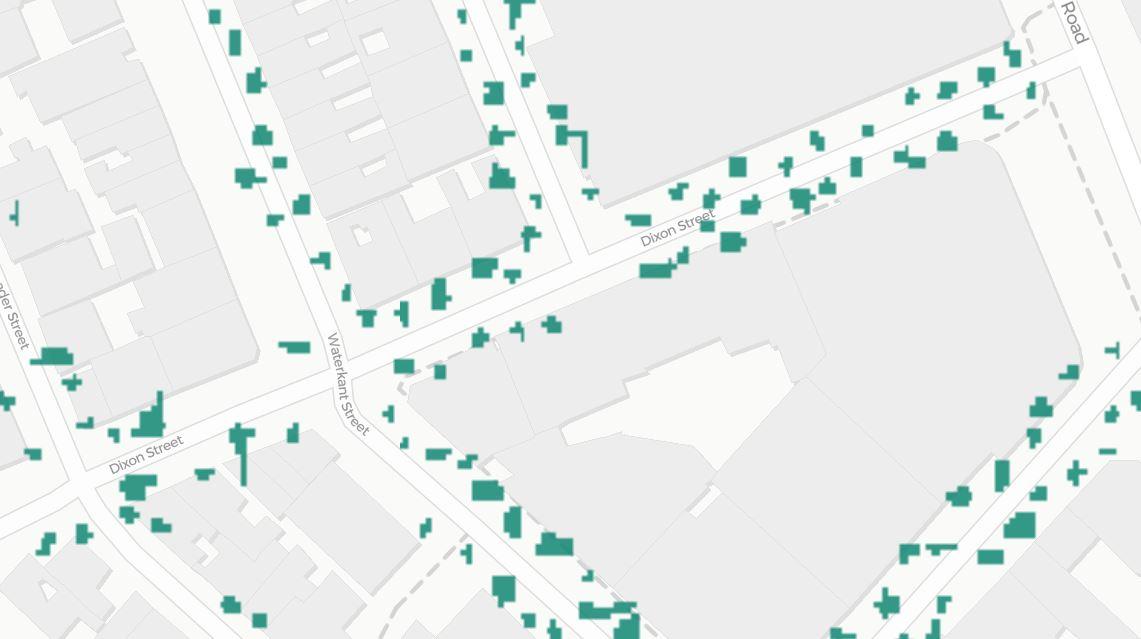
Additional tree cover (change)
This layer shows the additional tree canopy created under a modeled scenario implementation. Trees are added within plantable areas until the target canopy coverage is reached. The height and crown structure of the simulated trees are derived from the characteristics of existing trees in the city to represent realistic planting outcomes.
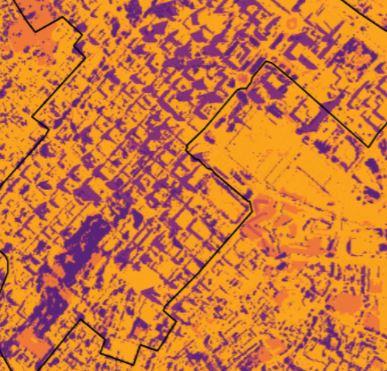
Universal Thermal Climate Index
This layer shows the Universal Thermal Climate Index (UTCI), a temperature-like metric that describes how hot or cold conditions feel to the human body. UTCI combines the physiological effects of air temperature, humidity, wind speed, and radiation on human thermal comfort. The index reflects how people experience outdoor conditions by accounting for heat exchange between the human body and the surrounding environment, including typical clothing adaptation to local weather conditions. UTCI is calculated using meteorology from ERA5 reanalysis data and Mean Radiant Temperature (MRT) modeled with the open-source SOLWEIG (SOlar and LongWave Environmental Irradiance Geometry) model.
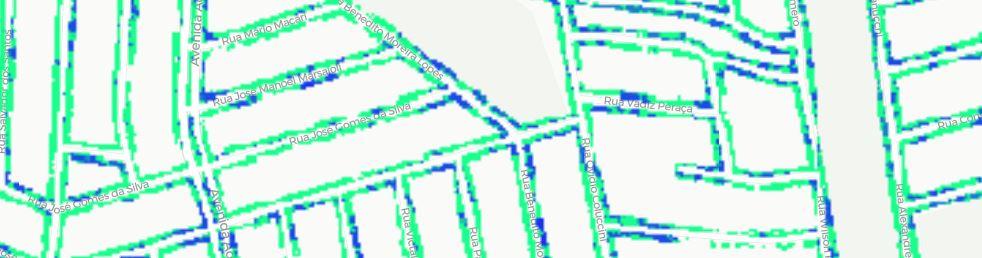
Universal Thermal Climate Index (Change)
This layer shows the change in Universal Thermal Climate Index (UTCI), a temperature-like metric that describes how hot or cold conditions feel to the human body, based on a modeled infrastructure scenario. UTCI combines the physiological effects of air temperature, humidity, wind speed, and radiation on human thermal comfort. The index reflects how people experience outdoor conditions by accounting for heat exchange between the human body and the surrounding environment, including typical clothing adaptation to local weather conditions. UTCI is calculated using meteorology from ERA5 reanalysis data and Mean Radiant Temperature (MRT) modeled with the open-source SOLWEIG (SOlar and LongWave Environmental Irradiance Geometry) model.
Universal Thermal Climate Index (Scenario)
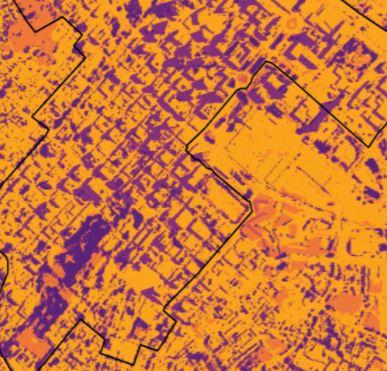
This layer shows the Universal Thermal Climate Index (UTCI), a temperature-like metric that describes how hot or cold conditions feel to the human body, based on a modeled infrastructure scenario. UTCI combines the physiological effects of air temperature, humidity, wind speed, and radiation on human thermal comfort. The index reflects how people experience outdoor conditions by accounting for heat exchange between the human body and the surrounding environment, including typical clothing adaptation to local weather conditions. UTCI is calculated using meteorology from ERA5 reanalysis data and Mean Radiant Temperature (MRT) modeled with the open-source SOLWEIG (SOlar and LongWave Environmental Irradiance Geometry) model.
Vegetation cover
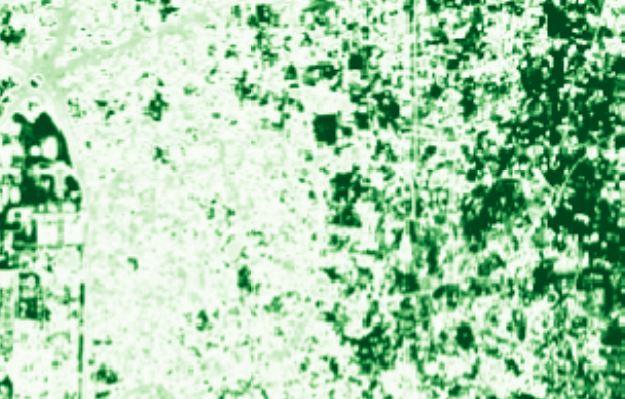
This layer shows the vegetation cover, calculated as the percent of land in each 10-meter grid cell that is covered by trees or low-stature vegetation. It is estimated using a measure called fractional vegetation, which is derived from the Normalized Difference Vegetation Index (NDVI) estimated from Sentinel-2 satellite imagery. While fractional vegetation is commonly reported as a number between 0 and 1, we report it as the percent of vegetation cover from 0% (for no vegetation) to 100% (for full vegetation).